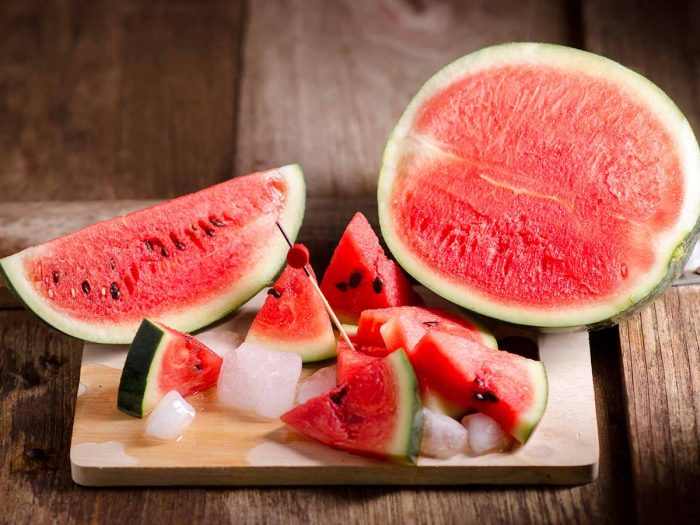
The health benefits of watermelon include prevention of kidney disorders, high blood pressure, cancer, diabetes, heart diseases, heat stroke, macular degeneration, and impotence.
What is Watermelon?
Watermelon is a fruit
that grows on a vine-like flowering plant native to Southern Africa. It
was cultivated in the Nile River Valley, in Egypt, and eventually in
China, roughly 1,000 years ago. Now, watermelon is grown around the
world, and in 44 of the 50 states in America. It is specifically
selected to grow larger and juicier, resulting in the huge fruits that
many of us are familiar with. The green outer rind is hard and fleshy,
and rarely eaten, while the interior is soft, red or pink flesh
containing many seeds; this is the part of watermelon which is typically eaten.
As for accessing the total medicinal benefits of watermelons, it is highly dependent on the variety of watermelon and the ripeness. Beta-carotene and lycopene are usually available in high quantities
once the watermelon is completely ripe, and don’t be afraid to eat the
watermelon rind; there are quite a few nutrients in there as well,
particularly roughage and fiber.Nutritional Value of Watermelon
The healthy or beneficial effects of watermelon are mainly derived from its unique nutrients, vitamins, minerals, and organic compounds. These include significant amounts of vitamin C, calcium, magnesium, fiber, protein, and a large amount of potassium. Furthermore, they contain vitamin A, vitamin B6, niacin, thiamin, and a wide variety of carotenoids and phytonutrients, including lycopene!
The question is, why is there so much craze for watermelon? At first
glance, it may seem like nothing more than a big ball of water. We all
know that there is nothing more refreshing than a big, chilled wedge of
watermelon on a hot, summer day and it does sport a stylish scientific name of Citrullus lanatus, but what’s the real reason so many people flock to grocery stores every summer to buy a big fruit like this one? Well, it is hard to narrow it down to a single reason; there are actually a lot of them.Health Benefits of Watermelon
All the above components of watermelons contribute to their
major impact on health; let’s explore some more details of those
benefits below.
Treats Kidney Disorders
Watermelons contain a lot of potassium, which is very helpful in cleaning out the toxic depositions in the kidney. Moreover, they are helpful in reducing the concentration
of uric acid in the blood, thereby reducing the chances of kidney
damage and the formation of renal calculi. In addition to this, being
high in water content, watermelons induce urination, which is again
helpful for cleaning the kidneys. Also, the antioxidants present in
watermelon ensure good health of the kidneys for a long time and reduce
signs of premature aging like wrinkles and age spots on the skin.
Prevents Heat Stroke
Watermelon is effective in reducing both your body
temperature and blood pressure. Many people in tropical regions eat this
fruit every day in the afternoon during summer to protect themselves
from heat stroke. The high amount of water in watermelons also
stimulates a release of excess liquid in the form of sweat, which cools
your body further during hot summer days.
Regulates Blood Pressure
The amount of potassium and magnesium present in watermelons is very beneficial in terms of lowering blood pressure. Potassium is considered a vasodilator, meaning that it releases the
tension on blood vessels and arteries, thereby stimulating blood flow
and reducing the stress on the cardiovascular system. The carotenoids
present in these fruits also prevent hardening of artery walls and
veins, thereby helping reduce blood pressure and the chances of blood clots, strokes, heart attacks, and atherosclerosis.
Prevents Cancer
Watermelons have gained a lot of attention in recent years,
primarily because of their impressive level of lycopene, a carotenoid phytonutrient compound that is increasingly being linked to cancer prevention. Lycopene has been shown to significantly reduce the risks of prostate,
breast, colon, lung, and endometrial cancer. All in all, between the
antioxidant potential of vitamin C and the impact of lycopene,
watermelon is a great anti-cancer fruit!
Controls Diabetes
Diabetics, who are supposed to have a low energy and low sugar
diet, often complain about starving since they don’t get to eat their
staple diets, which gives them the feeling of being half-fed.
Watermelons can be a good supplement for them. In spite of being sweet
in taste, a thick wedge will give them very few calories, since
ninety-nine percent of its total weight is composed of water and
roughage. Moreover, the vitamins and minerals such as potassium and
magnesium help in proper functioning of insulin in the body, thus lowering the blood sugar level.
Arginine, another component found in watermelons, is very effective at
enhancing the impact of insulin on blood sugar. Diabetics can also have
curries, steaks, and salads made from watermelon rinds, which are even
lower in sugar.
Heart Health
Lycopene, a carotenoid found in abundance in watermelon, improves cardiac functions. Beta-carotene, known for its great antioxidant and anti-aging
properties, keeps you young at heart and prevents age-related cardiac
problems. The roughage in watermelon, along with vitamin C, carotenoids,
and potassium (potassium cuts the risk of a heart attack), helps reduce
cholesterol and keep your heart safe from many dangerous conditions.
Prevents Macular Degeneration
Don’t worry about eye health
and macular degeneration if you eat plenty of watermelons. Thanks to
the beta-carotene, vitamin C, lutein, and zeaxanthin, your eyes are well
protected.They ensure the protection of your eyes from age-related blindness and
degeneration and prevent your eyes from ailments such as drying up of
eyes and optic nerves, as well as glaucoma.

Cures Impotence
Arginine, present in watermelon, is beneficial in curing
erectile dysfunction, and the stimulating nature of the chemical can
boost the libido, reduce frigidity, and give your love life a fresh
start after you enjoy a few slices of watermelon together!
Comments
Post a Comment