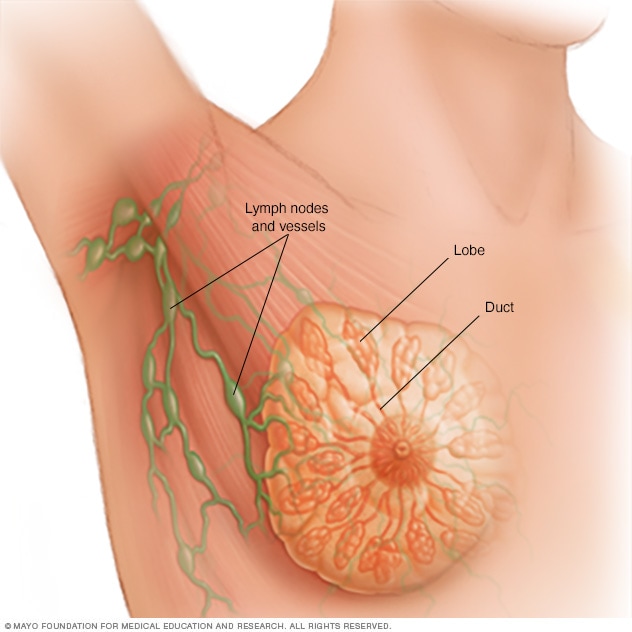
After skin cancer, breast cancer is the most common cancer diagnosed in women in the United States. Breast cancer can occur in both men and women, but it's far more common in women.
Substantial support for breast cancer awareness and research funding has helped create advances in the diagnosis and treatment of breast cancer. Breast cancer survival rates have increased, and the number of deaths associated with this disease is steadily declining, largely due to factors such as earlier detection, a new personalized approach to treatment and a better understanding of the disease.
One in eight women develop breast cancer in their lifetime, but not everyone’s risk is the same.
Some people will have a higher or lower risk than others. Our chances of developing breast cancer depend on a combination of our genes and bodies, lifestyle and life choices and the surrounding environment.
A woman whose mother, sister, or daughter has had breast
cancer is two to three times more likely to develop the disease,
particularly if more than one first-degree relative has been affected.
Researchers have identified two genes responsible for some instances of
familial breast cancer.
These genes are known as BRCA1 and BRCA2. About one woman in 200
carries the genes. Having one of them predisposes a woman to breast cancer but does not ensure that she will get it.
Generally, women over age 50 are more likely to get breast cancer than younger women, and African-American women are more likely than Caucasians to get breast cancer before menopause.
A link between breast cancer and hormones is clear. Researchers think that the greater a woman's exposure to the hormone estrogen, the more susceptible she is to breast cancer. Estrogen
tells cells to divide; the more the cells divide, the more likely they
are to be abnormal in some way, possibly becoming cancerous.
A woman's exposure to estrogen and progesterone
rises and falls during her lifetime, influenced by the age she starts
and stops menstruating, the average length of her menstrual cycle, and
her age at first childbirth.
A woman's risk for breast cancer is increased if she starts
menstruating before age 12, has her first child after age 30, stops
menstruating after age 55, or has a menstrual cycle shorter or longer
than the average 26-29 days. Women who have taken birth control pills in
the recent past may have a slightly higher risk of developing breast
cancer. This risk goes away if you have not taken birth control pills
for at least 10 years. Some studies suggest that taking hormone
replacement therapy for menopause with combined estrogen and progestin
may increase risk, especially when taken for more than five years. The
jury is still somewhat out on this matter, though. Heavy doses of radiation therapy may also be a factor, but low-dose mammograms pose almost no risk.
The link between diet and breast cancer is debated. Obesity
is a noteworthy risk factor, and drinking alcohol regularly --
particularly more than one drink a day -- may promote the disease. Many
studies have shown that women whose diets are high in fat are more
likely to get the disease. Researchers suspect that if a woman lowers
her daily calories from fat -- to less than 20%-30% -- her diet may help protect her from developing breast cancer.
Symptoms
-
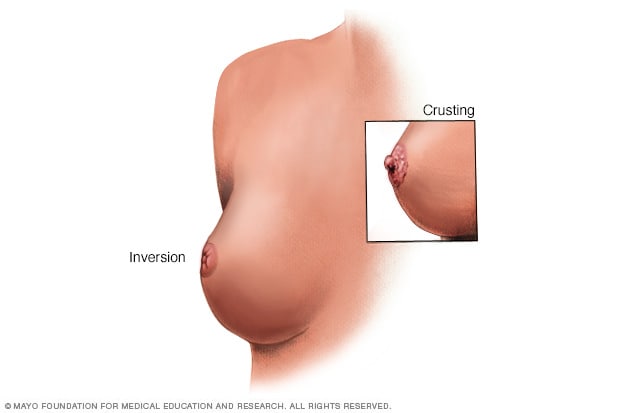
Nipple changes
- A breast lump or thickening that feels different from the surrounding tissue
- Change in the size, shape or appearance of a breast
- Changes to the skin over the breast, such as dimpling
- A newly inverted nipple
- Peeling, scaling, crusting or flaking of the pigmented area of skin surrounding the nipple (areola) or breast skin
- Redness or pitting of the skin over your breast, like the skin of an orange
Comments
Post a Comment